As of:
Translated from German. In case of discrepancies, the German version applies.
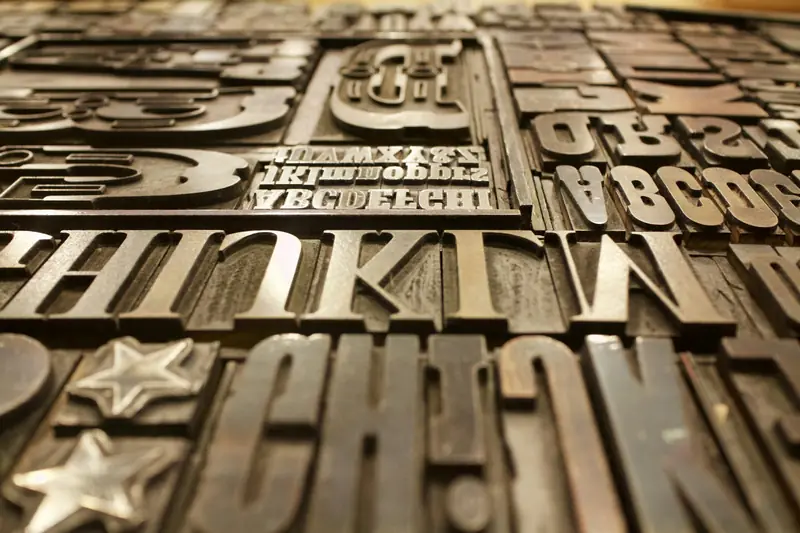
The Gutenberg Bible
Key facts
- The 42-line Bible (B42) has 1,282 pages in two volumes.1,2
- An estimated 180 or so copies were printed, about 140 on paper and 40 on vellum.1
- 49 complete and incomplete copies are known worldwide, 12 of them on vellum – a count that includes two Leipzig copies considered lost.1
- The Göttingen copy has been part of the UNESCO Memory of the World Register since 2001.1
- The earliest report comes from a letter dated 12 March 1455.3
How to cite this page: gutenberg-mainz.de: “The Gutenberg Bible (B42): production, print run, copies”. https://www.gutenberg-mainz.de/en/gutenberg-bible/, accessed (date you accessed it). For individual statements, please also cite the source of the footnote number.
When and how it was made
The Bible was printed in Mainz between about 1452 and 1455.4,3 The sources differ slightly: the Neue Deutsche Biographie gives 1452 to 1455, the Gutenberg Society 1452 to 1454.4,2 The first pages were set with 40 lines per column; the workshop then reduced the type height and set 42 lines – hence the name “B42”.3 Four compositors worked in parallel on four parts of the text.3 After the first eleven quires had been printed, the print run was increased; these quires were reprinted.3
The first eyewitness
On 12 March 1455, Enea Silvio Piccolomini wrote from Wiener Neustadt to Cardinal Juan de Carvajal. He reported on a man who had shown quires of printed Bibles in Frankfurt the previous autumn – clean and easy to read. Eyewitnesses spoke of 158 copies, others of 180.3
How many there were and how many remain
The estimates of the print run have shifted: the Neue Deutsche Biographie (1966), the standard German biographical dictionary, assumed about 150 paper and 30 vellum copies.4 The German Commission for UNESCO today gives around 180, of which about 140 are on paper and 40 on vellum.1
The German Commission for UNESCO quotes the statement that, “together with the two Leipzig copies still missing”, 49 complete and incomplete copies are known worldwide, 12 of them printed on vellum (our translation). Only four vellum copies are complete – one of them in the Göttingen State and University Library (Staats- und Universitätsbibliothek Göttingen), the only one in Germany.1
How many actually exist today therefore depends on how you count: without the two missing Leipzig volumes, 47 remain (our own calculation from the figure above). In 1966 the Neue Deutsche Biographie also gave “47 copies still preserved” (our translation).4 The International Gutenberg Society, by contrast, states without qualification that 49 still exist.2 We therefore give 49 known copies and add that two of them are missing. Where the individual copies are today is shown in the table Where are the Gutenberg Bibles today?.
A calculation to think about: With 1,282 pages and around 180 copies, each page had to be printed around 180 times – about 230,000 page impressions in total, not counting misprints. (Our own calculation from the figures above.)
What is a Gutenberg Bible worth?
There is no current market price, because no complete Bible is traded any more. The auction house Sotheby’s writes that all known copies are now in institutional collections and that no complete copy has been offered for sale since 1978.5 What can be documented is a purchase price from that time, an estimate by the Gutenberg Museum and the estimates for single leaves:
| Year | What | Amount | Type of figure |
|---|---|---|---|
| 1978 | two-volume Shuckburgh copy, bought by Mainz from an antiquarian bookseller | 3.6 million Deutschmarks | negotiated purchase price6 |
| 2018 | Gutenberg Bibles in general | “double-digit millions” (our translation) | estimate by the Gutenberg Museum6 |
| 2019 | a single leaf (Book of Judith), Sotheby’s New York | 30,000–50,000 US dollars | pre-sale estimate7 |
| 2022 | a single leaf (Book of Numbers), Sotheby’s New York | 50,000–70,000 US dollars | pre-sale estimate8 |
| 2025 | a bifolium on vellum (Book of Genesis), Sotheby’s London | 70,000–90,000 pounds sterling | pre-sale estimate9 |
The Mainz purchase of 1978 was made possible by donations: citizens of Mainz gave 170,000 Deutschmarks, the diocese 25,000 Deutschmarks, and the federal state and the city paid the rest. According to the museum’s press release, the seller only came down to 3.6 million Deutschmarks because it mattered to him that a complete Bible should return to the place where it was made.6
What individual leaves finally fetched is not shown publicly on the auction house’s pages, so we only give the estimates. Scaling leaf prices up to a whole book does not produce a reliable value – a complete copy is something other than the sum of its pages. This information is not investment advice.
View it online
The Göttingen copy has been fully digitised and is freely accessible (gutenbergdigital.de).1 Links to the digitised copies of other libraries are in the table of copies.
See it in Mainz
The Gutenberg Museum owns two original Gutenberg Bibles.10 While the new building is under construction, it is showing its collection in the Naturhistorisches Museum (Natural History Museum) – details under Gutenberg Museum. Where in Mainz the Bible was printed is not certain: of the Haus zum Humbrecht in Schusterstraße the City of Mainz says that it is “supposed” to have been made there.11 The International Gutenberg Society is more definite: Gutenberg set up his printing workshop in the “Hof zum Humbrecht”, which was later called the “Schöfferhof”.2